
Silicon Valley’s next arms race isn’t about chips or algorithms. It’s about atoms.
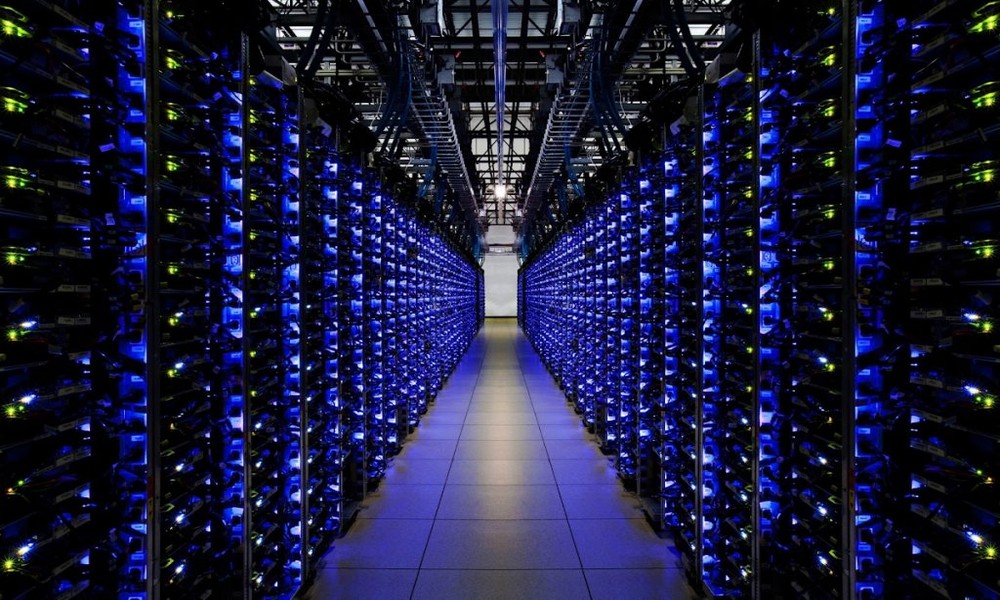
As hyperscalers race to build 39 major data centers with 7.1 gigawatts of current power and 35.2 gigawatts of projected power (according to the AI CapEx Tracker), they’re hitting a hard limit: grid capacity. The solution? Nuclear power. Microsoft, Amazon, Google, and Meta have all signed major nuclear energy deals. The SMR pipeline alone has grown from 25 GW at end of 2024 to 45 GW today. The outcome will determine who dominates AI infrastructure – and who gets stuck waiting for power.
Why Nuclear?
Data centers need power 24/7. Not sometimes. Not when the wind blows. Always. Renewables are great for optics and economics, but they’re intermittent. Solar produces power during the day. Wind depends on weather. Grid operators can’t rely on either for critical infrastructure.
Nuclear plants provide baseload power – constant, reliable supply regardless of time of day or weather. A typical 1 GW nuclear plant generates at 90%+ capacity factor consistently for decades. For AI infrastructure at massive scale, nuclear is the only baseload option that doesn’t produce carbon, provides reliable 24/7 power, can scale to multi-gigawatt levels, and has proven, mature technology.
The Companies Moving
Microsoft
In September 2024, Microsoft signed a 20-year, 835 MW Power Purchase Agreement with Constellation Energy to restart Three Mile Island Unit 1 in Pennsylvania – now rebranded as the Crane Clean Energy Center. Microsoft takes 100% of output in a deal valued at $1.6 billion. As of early 2026, the project is roughly 80% staffed with over 500 employees on-site and is running ahead of its original 2028 schedule, now targeting 2027 grid synchronization.
Amazon
Amazon signed a 1.9 GW nuclear PPA with Talen Energy for power from Pennsylvania’s Susquehanna nuclear plant, with full delivery ramping through 2032. Amazon is also investing $20 billion in Pennsylvania data centers adjacent to nuclear infrastructure, and has unveiled plans for 12 small modular reactors in Washington state – part of a broader 5 GW SMR program.
Google has struck nuclear deals with Kairos Power and NextEra Energy, targeting SMR deployment at scale. Google is betting that smaller, faster-to-build reactors will enable regional data center power without the decade-long timelines of traditional nuclear construction.
The Timeline Problem
Nuclear plants take a long time to come online. New construction requires 5-10 years minimum. Restarting an existing plant takes 2-3 years. SMRs are mostly 5+ years from commercial deployment. But the AI infrastructure buildout is happening now – companies are committing hundreds of billions of dollars across 2025-2026.
This creates a timing mismatch: capital commitments are happening in 2025-2026, but nuclear power comes fully online between 2027 and 2032. In the interim, data centers compete for limited grid capacity – and many are bridging the gap with on-site natural gas generation.
The Costs and Risks
Nuclear isn’t cheap. Building a new plant costs $10-20 billion. Restarting an existing plant is cheaper but still major – the Three Mile Island deal alone is valued at $1.6 billion. Additional risks: strong local opposition, slow regulatory approval, political exposure, and fragile public perception. A single nuclear incident would damage the entire strategy.
The Industry-Wide Signal
Amazon, Google, Meta, Microsoft, OpenAI, Oracle, and xAI have all signed the Ratepayer Protection Pledge – committing to build or buy new generation and cover infrastructure upgrade costs for their data centers. This signals that securing power is now a strategic priority, not just a procurement decision.
Winners get: reliable cheap power driving lower costs and market share, unlimited scaling, and long-term price certainty. Losers face supply constraints, rising costs, intermittency problems, and regional limitations on buildout.
The Geopolitical Play
China is building nuclear capacity faster than the US. If China reliably powers its AI infrastructure while US companies face grid constraints, Chinese AI companies gain a structural advantage. The Trump administration cited Three Mile Island’s restart as delivering on energy affordability and national security promises – a signal that this is no longer just a corporate energy decision.
What’s Next?
The next 24 months are decisive:
- 2027: Microsoft’s Crane Clean Energy Center (Three Mile Island) comes online
- 2027-2028: First wave of nuclear hits data centers; constraints ease for early movers
- 2028: Power infrastructure for Meta’s Richland Parish campus comes online
- 2030: Oklo advanced nuclear campus potentially online for Meta
- 2032: TerraPower Natrium units and Amazon’s Talen PPA reach full 1.9 GW volume
- 2028+: Second wave of SMRs and new plants deploy broadly
The Reality
The AI infrastructure spend now underway (tracked at the AI CapEx Tracker) is real. But it’s only feasible if companies can power it. Nuclear isn’t perfect – it’s expensive, slow, and politically risky. But it’s the only viable path to the baseload power hyperscalers need at scale. With 45 GW of SMR agreements signed and Meta committing 6.6 GW in a single announcement, the nuclear bet is growing every quarter. The outcome will shape AI infrastructure dominance for the next decade.