
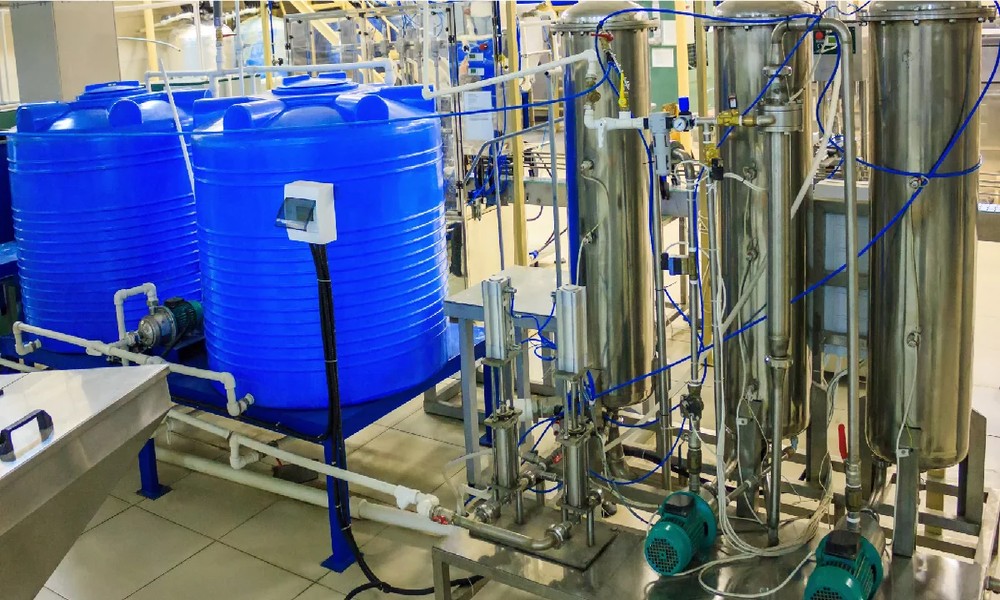
In the rapidly advancing industrial and scientific sectors of 2026, the demand for ultrapure water has reached an unprecedented peak, driven by the necessity for extreme precision in high-tech manufacturing. Whether you are operating a high-precision laboratory or a large-scale manufacturing facility, the complete removal of ionic contaminants is vital to ensuring experimental accuracy and product longevity. Understanding how to select the right Deionized (DI) Water System (เครื่องกรองน้ำ DI) is the first step toward optimizing technical operations and preventing costly production errors.
Traditional filtration is no longer sufficient for modern, sensitive applications such as semiconductor fabrication, pharmaceutical production, and advanced chemical analysis, where even trace minerals can compromise an entire batch. Investing in a specialized system allows professionals to maintain rigorous quality control standards while effectively minimizing operational risks.
1. Defining Water Purity Standards and Resistivity Requirements
The primary requirement is ensuring the system consistently meets specific resistivity targets, such as the 18.2 MΩ·cm standard for Type I ultrapure water. When evaluating a system, verify that the ion-exchange resin quality is sufficient to remove trace minerals and dissolved salts.
Since laboratory grades vary, you must match the system’s output to relevant ASTM, CAP, or ISO standards. Failing to achieve the correct ionic balance can skew results or damage sensitive machinery. Always analyze feed water quality first to determine if additional pre-filtration is required.
2. Production Capacity and Peak Flow Rate Optimization
Accurately calculating daily ultrapure water volume is essential to avoid bottlenecks in production or laboratory workflows. A DI water system must be selected based on its peak flow rate to ensure it meets maximum demand without compromising water quality. Many facilities now opt for modular, scalable systems that expand alongside production needs, offering a flexible and cost-effective investment. While insufficient flow rates cause costly delays, oversized systems can lead to unnecessary energy consumption. Proper sizing ensures that ion-exchange resins are utilized effectively and economically.
3. Advanced Real-Time Monitoring and IoT Integration Features
Modern facilities now require integrated sensors for real-time monitoring of water resistivity and Total Organic Carbon (TOC). Systems equipped with IoT capabilities enable remote tracking via mobile apps, ensuring constant oversight of water quality. This technology provides instantaneous alerts for resin exhaustion or quality deviations, mitigating the risk of batch failures. Additionally, automated logging and data export are essential for satisfying strict regulatory audits and maintaining tamper-proof compliance records.
4. Total Cost of Ownership: Maintenance and Consumable Management
Long-term costs are primarily driven by resin replacement frequency and biofilm prevention. When evaluating systems, prioritize designs with quick-change cartridges or efficient regeneration processes that minimize downtime. Additionally, ensure local availability of parts to avoid hidden costs. Modern systems emphasize user-friendly maintenance, enabling internal engineers to perform routine checks with less reliance on third-party support. A five-year Total Cost of Ownership (TCO) analysis is essential for balancing initial capital expenditure against ongoing operational expenses.
5. Pre-treatment Synergy and Resin Protection Strategies
To maximize the lifespan of costly deionization (DI) resins, a system must be seamlessly integrated with effective pre-treatment technologies, such as Reverse Osmosis (RO). A robust DI water system operates with significantly higher efficiency when the “heavy lifting”-the removal of bulk contaminants-is managed by a pre-filtration stage. The synergy between RO and DI technologies has become the industry standard for producing high-purity water while protecting sensitive ion-exchange beds from premature fouling. This multi-stage approach ensures consistent water quality and significantly reduces the frequency of resin replacements, fostering greater environmental sustainability and reducing operational waste.
In conclusion, choosing the right deionization technology in 2026 is a strategic decision that directly impacts the accuracy of your scientific research and the efficiency of your industrial manufacturing processes. By focusing on water grade standards, production capacity, smart monitoring, maintenance costs, and pre-treatment integration, you can ensure a reliable supply of ultrapure water for years to come.
Investing in high-quality Deionized (DI) Water Systems is the best way to future-proof your facility against increasing regulatory demands and evolving technical challenges. As the industry continues to evolve, staying informed about the latest filtration innovations will remain a key factor in maintaining a competitive edge in both local and international markets.
When it comes to sourcing world-class deionization solutions, Safety Drink stands as the premier expert in the Thai market, offering a comprehensive range of systems tailored for both laboratory and industrial applications. Safety Drink provides highly reliable technology that meets the strictest international standards, ensuring your facility consistently achieves the ultrapure water quality required for precision work.