
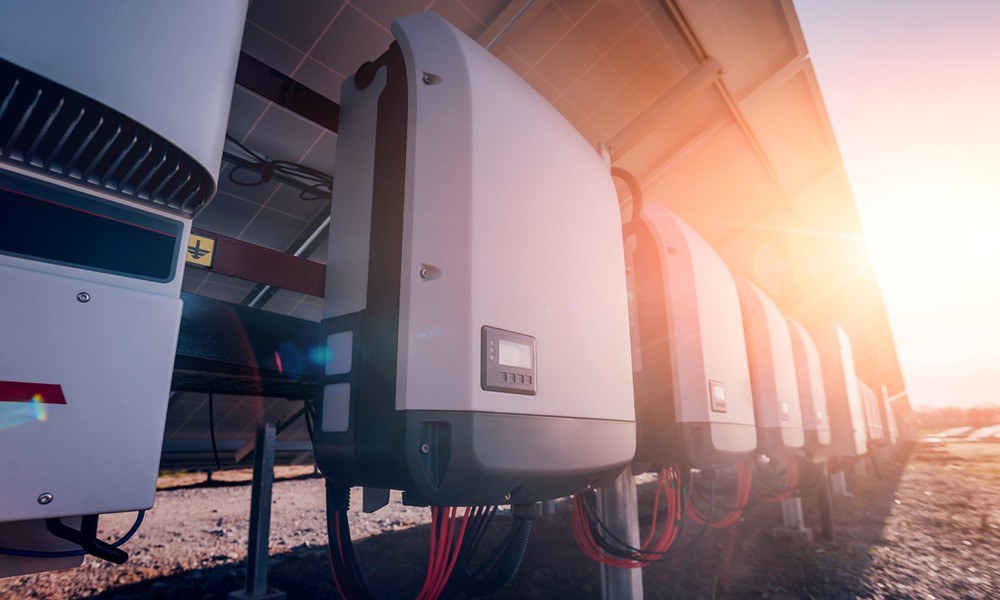
Solar inverters are a key component of any home solar system, responsible for converting the energy generated by solar panels into usable electricity for everyday appliances. Types of Solar Inverters include different systems such as on-grid, off-grid, and hybrid inverters, each designed for specific needs and living conditions. With these options available, understanding how they work is essential before making a decision. Choosing the right inverter not only improves system efficiency but also ensures better long-term savings and reliable energy use at home.
Types of Solar Cell Inverters
A home solar system’s efficiency depends not only on solar panels but also on the inverter, which converts DC electricity from sunlight into AC for household use. Solar inverters are mainly divided into 3 types, each suited to different needs.
1. Solar Cell Inverters On-grid
On-grid is a type of solar inverter system, and Types of Solar Inverters generally include On-grid, Off-grid, and Hybrid systems. On-grid is a system that is directly connected to the electricity grid and does not use batteries. When it generates more electricity than is used, the excess power can be sent back to the grid (depending on utility policies). Its advantages are lower installation costs compared to other systems, easy maintenance, and suitability for homes that use electricity during the daytime. However, its limitations include that the system stops working immediately during a power outage and it cannot provide backup power.
2. Solar Cell Inverters Off-grid
Off-grid is one of the main types of solar inverters. It is a system that is not connected to the electricity grid and relies entirely on solar energy stored in batteries. Its advantages are that it can provide electricity even without access to the utility grid and is suitable for remote areas. However, its limitations include the need for batteries, which increase costs, and the requirement for accurate energy planning and calculation.
3. Solar Cell Inverters Hybrid
Hybrid is another type within the types of solar inverters, combining both On-grid and Off-grid systems. It allows the use of solar power, batteries, and electricity from the grid simultaneously. Its advantages are high flexibility, the ability to store backup power in batteries, and continuous electricity use even during power outages. However, its limitations include higher costs compared to On-grid systems and a more complex setup.
Choosing the Right Inverter Based on Meter Size and Usage
Choosing the right inverter should be based mainly on the “electricity meter size” and “household electricity usage behavior” to ensure the system operates at maximum efficiency and delivers the best value.
– Daytime electricity use (On-grid): Suitable for homes that mainly use electricity during the day, as the system works efficiently with sunlight and does not require battery storage.
– Need backup power (Hybrid): Suitable for homes that want continuous power supply, as it can store energy in batteries and still operate during power outages.
– No access to grid (Off-grid): Suitable for remote areas where there is no electricity connection, relying fully on solar energy and battery storage.
– Meter size (e.g., 5(15), 15(45) amps): The inverter capacity must match and support the household electrical load to ensure safe and efficient operation.
– Daily electricity consumption (kWh): Helps determine the appropriate system size to meet actual energy usage needs.
– Installation space for solar panels: Sufficient roof or ground space is needed to generate enough power.
– Budget for investment: Costs vary depending on system type, battery inclusion, and installation scale.
Choosing a solar inverter should be based on household electricity usage behavior and site conditions. Inverter solar cell, how many types are there? (Inverter solar cell มีกี่แบบ) Homes that mainly use electricity during the day are suitable for On-grid systems, those needing backup power are suitable for Hybrid systems, and areas without electricity access are suitable for Off-grid systems. It is also important to consider meter size, daily electricity consumption, installation space, and budget to ensure the system is cost-effective and highly efficient.
Selecting the right solar inverter is crucial as it directly affects system performance and value. Having experts assist in the selection process, such as EWAVE, can help ensure a more accurate match to actual usage needs. With professional expertise in solar energy, EWAVE provides end-to-end services including consultation, product sales, installation, and after-sales support, ensuring a well-designed system that is efficient and reliable in the long term.